
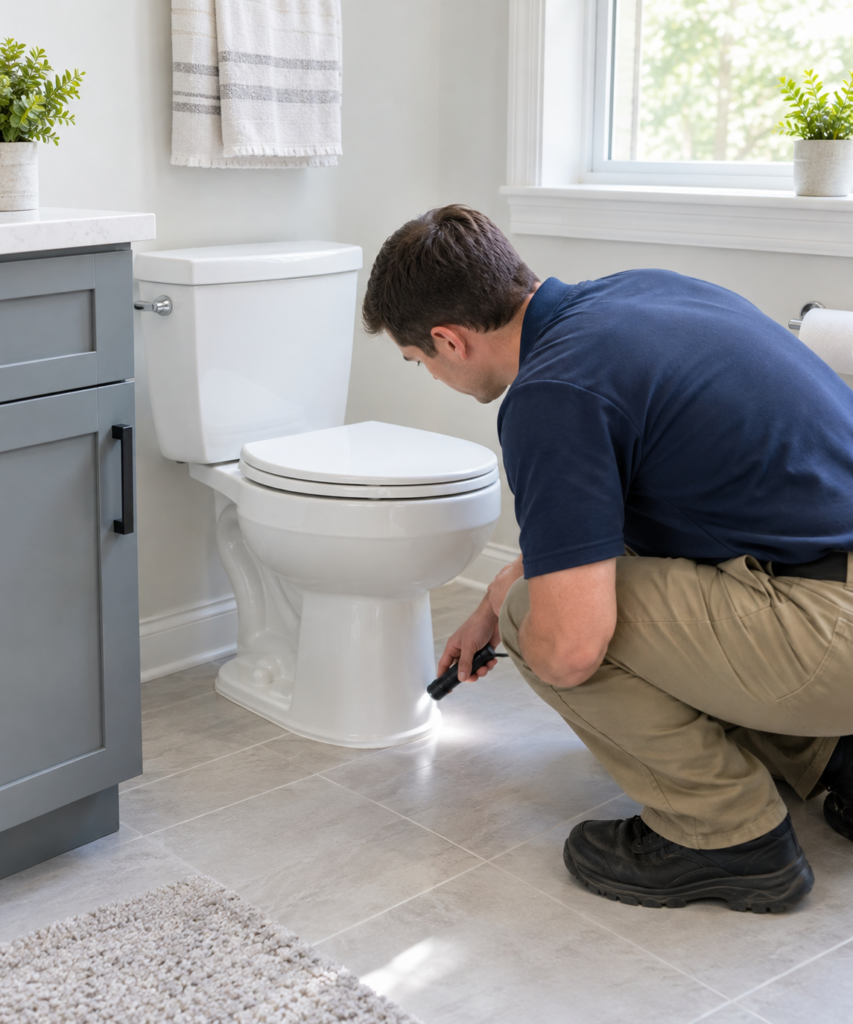
You walk into the bathroom and there it is. That unmistakable rotten-egg, sewer-ish smell that makes you back out of the room. You light a candle, spray some air freshener, maybe crack a window. An hour later, it’s back.
You’re not imagining things, and you’re definitely not alone. A sewage smell in the bathroom is one of the most common problems homeowners around Columbia call us about. Sometimes the cause is simple. Other times it’s a real plumbing problem that needs attention fast. Let’s walk through the usual suspects.
What Exactly Are You Smelling?
That odor is usually sewer gas. It’s a mix of gases created as waste breaks down in your drain and sewer lines, and one of them, hydrogen sulfide, is what gives it the rotten-egg smell. Your plumbing is designed to keep that gas out of your living space using water seals, vent pipes, and tight connections.
So when you smell it in your bathroom, something in that system has failed. Your job is to figure out which part.
A quick safety note: low-level sewer gas is mostly an annoyance, but strong or lingering odors can cause headaches, nausea, and dizziness. If you feel sick, get outside and call for help. And if the smell is more like natural gas, leave the house and call your utility company right away.
1. A Dry P-Trap
This is the number one cause, and it’s the easiest to fix.
Under every sink, tub, and shower, there’s a curved section of pipe called a P-trap. It holds a little water, and that water acts like a plug that blocks sewer gas from rising up through the drain. The trouble is that water evaporates. In a guest bathroom or a shower nobody uses, the trap can dry out in a few weeks.
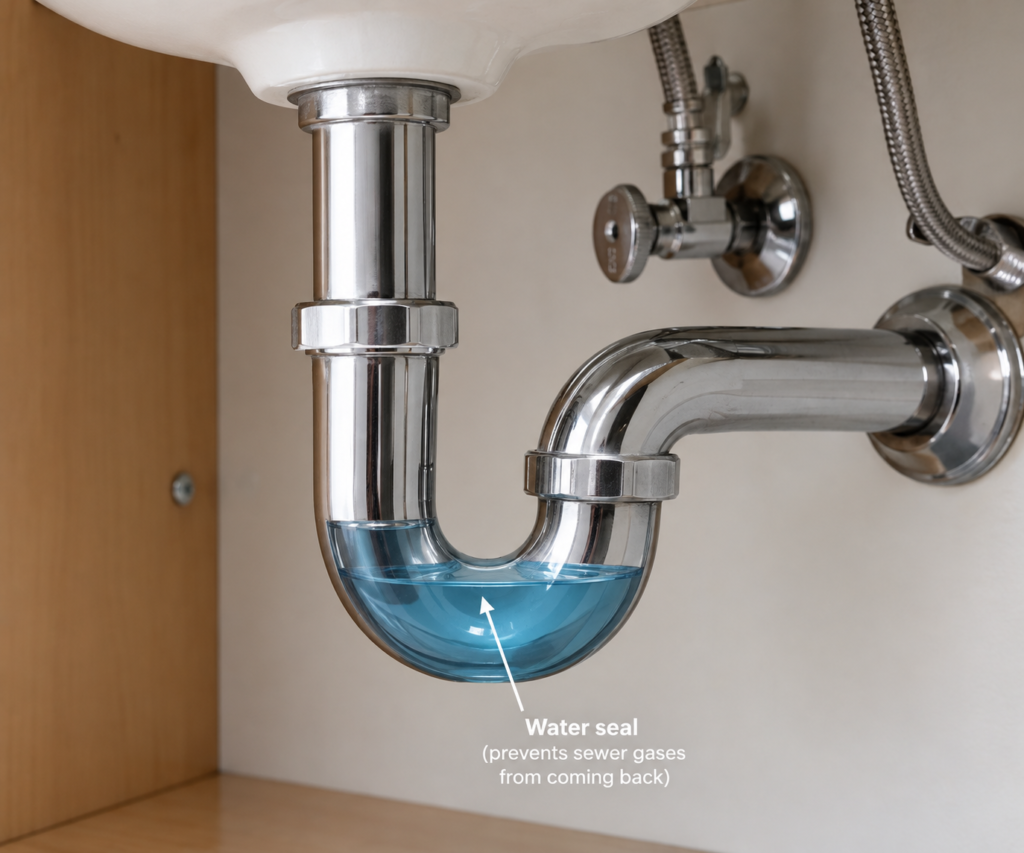
The fix: Run the water in that fixture for about 30 seconds. If the smell fades within a day, you’ve found your culprit. To keep it from happening again, run the water in rarely used bathrooms once a month.
2. A Failed Wax Ring Under the Toilet
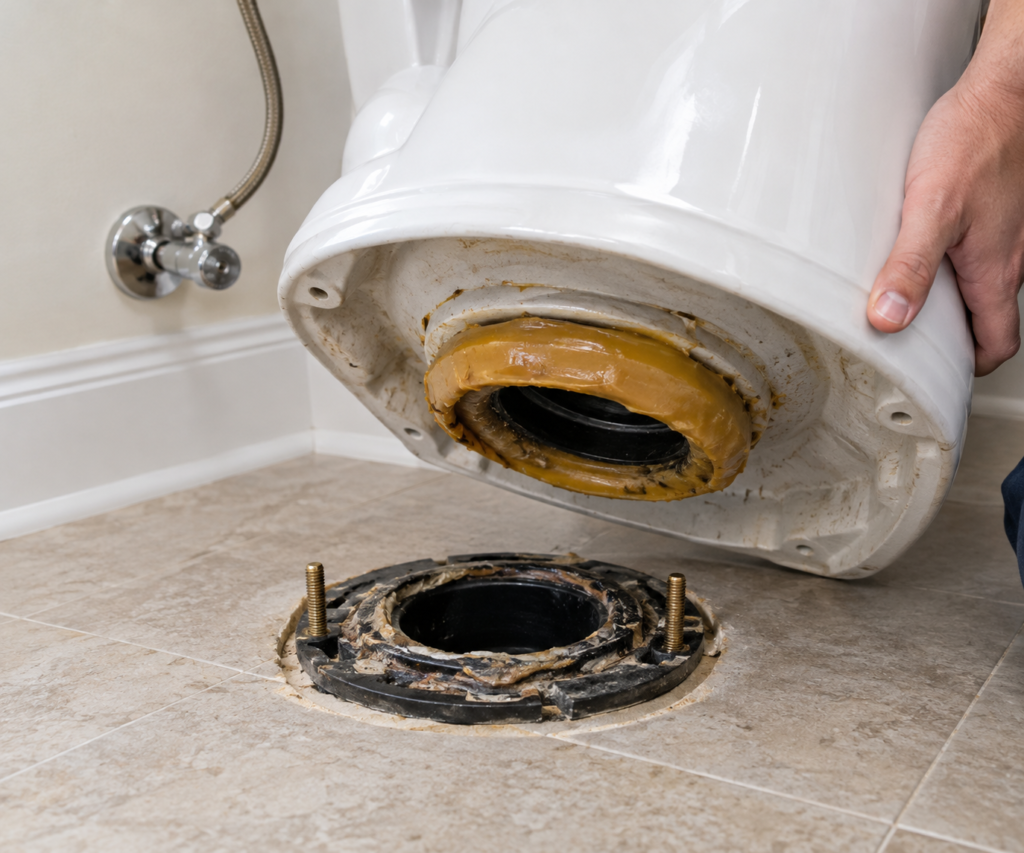
Your toilet sits on a wax ring that seals it to the drain flange in the floor. Over time, that seal can break down, or the toilet can get loose and rock slightly, which breaks the seal.
Signs of a bad wax ring include a wobbly toilet, a smell that’s strongest near the base, and sometimes water pooling around the bottom. That last one matters. Water at the base can soak into the subfloor and turn a smell problem into a water damage problem pretty quickly.
The fix: Replacing a wax ring isn’t a huge job for a plumber, but if the floor around it is soft or stained, there’s likely moisture damage underneath that needs to be dried out properly.
3. A Clogged or Gunked-Up Drain
Sometimes the smell isn’t sewer gas at all. It’s the drain itself. Hair, soap scum, toothpaste, and skin cells build up inside the pipe and form a slimy film that bacteria love. That film can smell pretty awful, especially in a sink or shower that drains slowly.
The fix: Try pulling out the stopper and cleaning it, then flush the drain with hot water and a baking soda and vinegar mix. We’d skip the harsh chemical drain cleaners. They can be rough on older pipes, and they’re a hazard to anyone who has to work on the drain later.
If the drain is always slow or gurgles, the clog may be deeper in the line. If a tub, sink, or toilet ever spills over, our clogged drain overflow cleanup team can clean it up before it soaks into your floors or walls.
4. A Blocked or Damaged Vent Pipe
Your plumbing system has vent pipes that run up through your roof. They let sewer gas escape safely outside and let air into the system so your drains flow properly. If a vent gets blocked by a bird’s nest, leaves, or debris, or if the pipe cracks somewhere in the wall, gas can’t go where it’s supposed to. It gets pushed back into the house through the easiest exit, which is often a bathroom drain.
Clues include gurgling drains, a toilet that bubbles when you run the sink, and smells that come and go.
The fix: This one usually needs a plumber. Climbing onto a roof to clear a vent isn’t something we recommend for a weekend DIY.
5. A Cracked or Broken Drain Line
If the pipe behind your wall or under your slab has a crack, gas and wastewater can leak out right into your home’s structure. This is especially common in older Columbia neighborhoods where homes still have aging cast iron or clay pipes.
You may notice a damp spot on a wall, a stain on the ceiling below the bathroom, or a smell that gets worse after you use the shower or flush. If you suspect a hidden problem, our pipe leak detection and cleanup service can find the source of the moisture before it spreads.
6. A Sewage Backup
This is the serious one. If your sewer line or the city main is blocked, wastewater can come back up through the lowest drains in your house. Often that’s a shower, a tub, or a floor drain. You might notice dark, dirty water, a very strong odor, or several fixtures acting up at once.
Sewage is classified as black water, which means it carries bacteria and other contaminants. It’s not something to mop up with towels. If you want to understand why the cleanup is so different, we break it down in our post on water damage categories explained, and if you want to know how it happens in the first place, read what causes sewer backup in a basement.
What to do right now:
- Stop using water in the house (no flushing, showers, or laundry).
- Keep kids and pets out of the area.
- Call a professional crew for emergency sewer backup cleanup and sanitation.
7. Hidden Moisture and Mold
Not every “sewage” smell is actually sewage. A musty, sour, or earthy smell in a bathroom often points to mold or mildew growing somewhere you can’t see, such as behind tile, under the vanity, or inside a wall that’s been getting damp from a small leak.
Columbia’s humid summers keep bathrooms damp longer than you’d think, especially without a good exhaust fan. If the smell is more musty than sewer-like, a mold inspection and testing visit can tell you what’s growing and where.
A Few Quick Checks You Can Do Today
Before you call anyone, a little detective work can save you time:
- Sniff around. Is the smell strongest near the toilet, shower drain, or sink?
- Run the water. Fill each drain for 30 seconds to refill any dry traps.
- Check the toilet. Give it a gentle push. Does it rock? Any moisture at the base?
- Look for stains. Check the ceiling below the bathroom and the walls around the tub.
- Run the fan. Make sure it actually pulls air, and leave it on 20 minutes after showers.
If the smell clears after you refill a trap, great. If it doesn’t, or if you see water where it shouldn’t be, it’s time for a closer look.
When to Call a Professional
You should reach out to a pro if:
- The odor is strong and doesn’t go away after a few days.
- You see sewage or dirty water coming up from a drain.
- The floor near your toilet feels soft, spongy, or looks stained.
- Multiple drains in the house are slow or gurgling.
- You or your family feel sick when you’re in the bathroom.
A plumber is the right call for repairing pipes, vents, and wax rings. But once water or sewage has gotten into your floors, walls, or subfloor, you also need a restoration team to dry things out and sanitize the area. If odor lingers after the repair, our deodorization services are designed to remove odors at the source instead of covering them up.
Don’t Ignore That Smell
A sewage smell in your bathroom is your house telling you something’s off. Sometimes the fix is as simple as running a faucet. Other times it’s a hidden leak or backup that gets costlier the longer it sits.
If you’re in Columbia, West Columbia, Cayce, Irmo, Lexington, or anywhere around the Midlands and aren’t sure what you’re dealing with, we’re happy to take a look. Our team is available around the clock. See everything we handle on our services page or check that we cover your neighborhood on our areas we serve page.
Ready to talk? Call (803) 721-1256 any time, day or night, or reach out through our contact page and we’ll get back to you.
FAQ (optional add-on for the end of the post, good for featured snippets)
Is a sewage smell in the bathroom dangerous?
Usually a faint smell is more of a nuisance, but strong or constant sewer gas can cause headaches, nausea, and dizziness. Black water from a backup also carries germs, so it should be cleaned by professionals.
Why does my bathroom only smell at night or after a shower?
Hot water and steam can release odors from a dirty drain or a slightly dry trap. Smells that come and go with no pattern often point to a venting problem.
How long does it take for a P-trap to dry out?
It depends on the home, but in a bathroom nobody uses, it can happen in a few weeks.
Leave a Reply