If you’ve ever had water spreading across your floor, your first instinct is probably to grab a mop and towels. But here’s what most Columbia, SC homeowners don’t realize: not all water damage is treated the same way – and treating a sewage backup like a simple pipe leak can put your family’s health, and your wallet, at serious risk.
Restoration professionals don’t just look at how much water is in your home. They look at what kind of water it is. This classification system – known as water damage categories – determines everything from the equipment used to the safety gear technicians wear to how much of your flooring and drywall has to be removed rather than dried. Understanding these categories before disaster strikes helps you make smarter, faster decisions when every minute counts.
What Are Water Damage Categories?
The water damage restoration industry follows standards set by the IICRC (Institute of Inspection, Cleaning and Restoration Certification), which sorts contaminated water into three categories based on the source and level of contamination. This classification isn’t just industry jargon – it directly shapes the water damage restoration plan a technician builds for your Columbia home, including whether materials can be dried and saved or must be removed and replaced.
Category 1: Clean Water
Category 1 water comes from a sanitary source and poses no immediate health risk. Think of a supply line that snapped behind your washing machine, an overflowing bathtub, or a broken water heater. This is the “best case” scenario in water damage – but it doesn’t stay that way for long.
Left untreated for more than 24-48 hours, Category 1 water can absorb contaminants from carpet, subflooring, or drywall and degrade into Category 2. This is why fast response matters so much with something like a burst pipe or a water pipe break – the clock is always working against you.
Category 2: Gray Water
Gray water contains a noticeable level of contamination – chemical, biological, or physical – that can cause discomfort or illness if you’re exposed to it. Common sources include washing machine overflow, dishwasher discharge, toilet overflow with urine (but no feces), and sump pump failures.
Cleanup at this stage requires more than fans and a shop vac. Affected porous materials like carpet padding often need to be removed, and technicians typically apply antimicrobial treatments during the drying process. Services like dishwasher overflow cleanup and toilet overflow cleanup usually fall into this category.
Category 3: Black Water
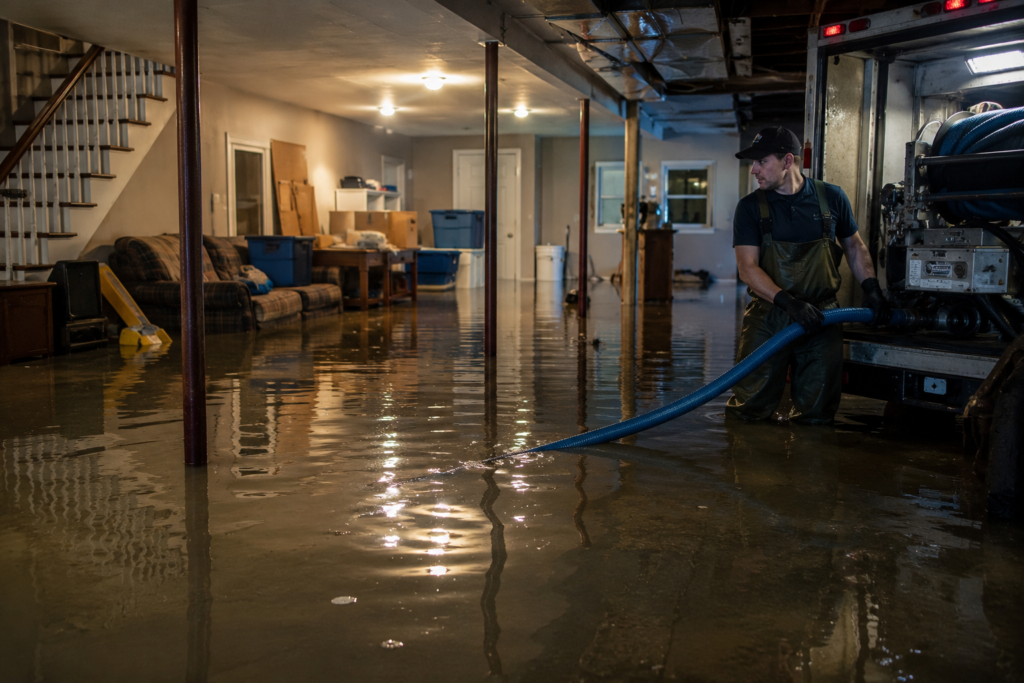
This is the most severe classification and includes grossly contaminated water that can contain pathogens, sewage, chemicals, or floodwater from rivers and storm surge. Sewage backups, flooding from Congaree River overflow after heavy South Carolina storms, and water that has picked up ground contaminants all qualify as Category 3.
Because of the serious health hazards involved, Category 3 cleanup requires full personal protective equipment, aggressive antimicrobial treatment, and near-total removal of porous materials that contacted the water. This is the level of contamination you’ll see in jobs like sewage backup cleanup and sanitation or major flood damage cleanup after storm events.
Why the Category Changes Everything About Your Cleanup
Homeowners often assume “water is water,” but the category determines almost every decision a restoration crew makes:
- What gets saved vs. thrown away. Category 1 water often allows carpet, pad, and drywall to be dried and salvaged. Category 3 water usually means these materials must be removed entirely, since drying doesn’t eliminate the biological hazard.
- What equipment and protective gear are used. Clean water jobs may only need air movers and dehumidifiers. Black water jobs require respirators, gloves, and containment barriers to protect both technicians and your family.
- How the structural drying and dehumidification process is designed. Contaminated water requires antimicrobial application before drying even begins, and moisture readings are monitored more closely to confirm no hidden pockets remain.
- Mold risk afterward. Any category of standing water left more than 24-48 hours creates conditions for mold growth. Category 2 and 3 water dramatically increase that risk, which is why many jobs also involve mold inspection and testing or full mold remediation once the water is removed.
- Insurance and cost implications. Category 3 losses typically involve more demolition, more disposal, and more documentation for your insurance claim – which is why an accurate initial classification protects you from being underpaid on your claim later.
Water Damage Classes: The Other Half of the Equation
Alongside categories, IICRC standards also define four “classes” of water damage based on how much moisture has been absorbed into materials and how difficult the space will be to dry – from Class 1 (minimal absorption) to Class 4 (deeply saturated materials like hardwood, plaster, and concrete). A basement affected by a slow leak might be Category 1 but Class 3 or 4 due to how long moisture sat in the walls. Professionals evaluate category and class together to build the right drying strategy, whether that’s a flooded basement, a soaked crawlspace, or water trapped under hardwood flooring.
How Columbia, SC Professionals Identify the Category
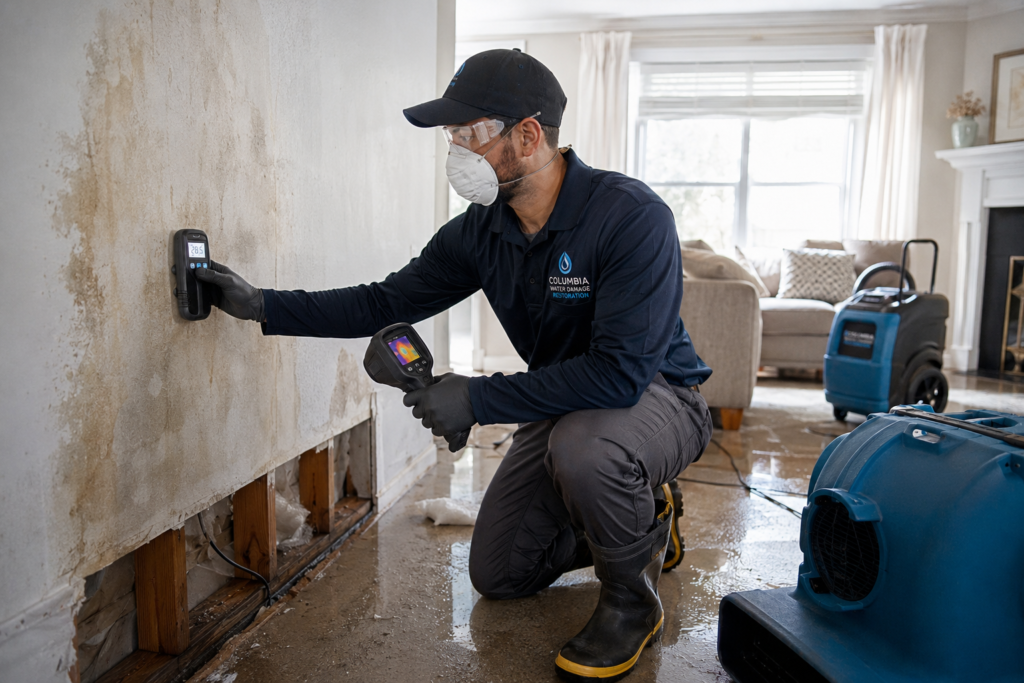
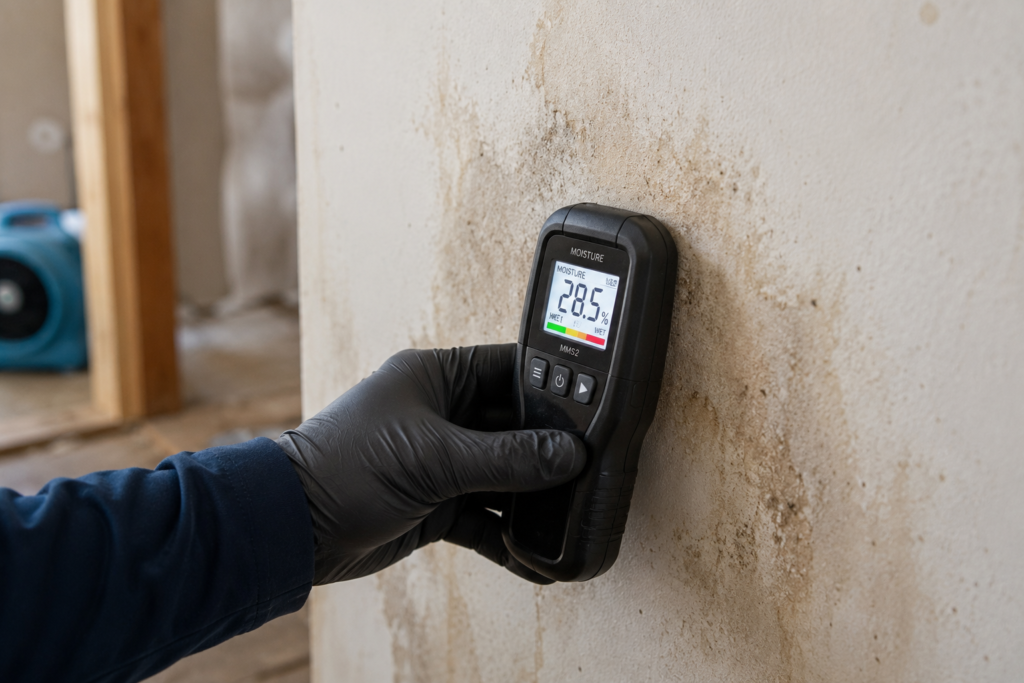
The moment our team arrives at a property, one of the first things we do is a full water damage inspection using moisture meters and thermal imaging cameras to map exactly how far water has traveled – often into walls, subfloors, and cavities that aren’t visible to the naked eye. We combine this with a visual and source assessment to correctly classify the water before any drying begins. Getting this step right the first time is what prevents secondary damage, lingering odors, and mold problems weeks later.
If your situation involves a source that’s already contaminated or unclear – sewage, floodwater, or water that’s been sitting for more than a day – it’s important to treat it as Category 2 or 3 by default rather than risk direct contact. The CDC’s safety guidelines on floodwater reinforce this same caution: floodwater should always be treated as though it’s contaminated until proven otherwise.
Why This Matters for Homeowners Across the Midlands
Whether you’re in West Columbia, Lexington, Irmo, or Forest Acres, South Carolina’s humid climate and older housing stock mean water damage rarely stays contained to one category or one room. A slow Category 1 leak behind a wall can silently escalate into a mold and structural issue if it isn’t caught early – which is exactly why a professional water damage inspection is worth the call, even for damage that looks minor on the surface.
Don’t Guess – Get the Right Classification the First Time
Misjudging a water damage category can mean the difference between a same-day dry-out and weeks of mold remediation, torn-out drywall, and disputes with your insurance adjuster. Our IICRC-certified team at First Choice Restoration has handled every category and class of water damage across Columbia, Richland County, and Lexington County, and we respond in 60 minutes or less, 24/7.
If you’re dealing with water damage right now – clean, gray, or black – don’t wait for it to get worse. Contact us or call (803) 721-1256 for a free, no-obligation inspection.
Leave a Reply