
Water damage is stressful, and not knowing what comes next makes it worse. Most people have never been through a restoration, so they don’t know who will show up, what the crew will do or how long it takes. This guide walks through the process from the first phone call to the final repairs, so nothing about water damage restoration in Columbia, SC catches you off guard.
Step 1: The First Call and Dispatch
When you call, a coordinator will ask a few quick questions: where the water came from, how long ago it started, which rooms are affected and whether anyone is in danger. If water is still flowing, you’ll be told how to shut it off. If there is any chance of electrical hazards, you’ll also be asked to turn off power to the affected area.
A crew is then sent to your home. Response time matters, because water spreads and soaks into materials quickly. In humid Columbia summers, mold can start growing within 24 to 48 hours on materials that stay wet.
Step 2: Inspection and Moisture Mapping
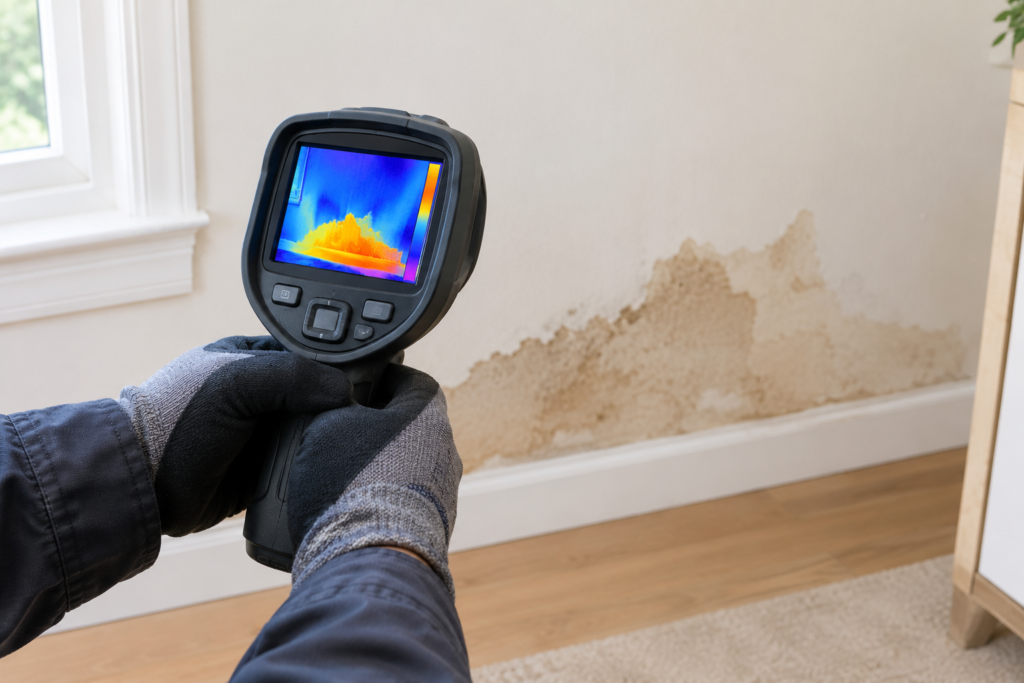
The first thing the technician does isn’t pulling out pumps. It’s finding out how far the water has gone. Using moisture meters and thermal cameras, the crew checks floors, walls, ceilings and cabinets, including areas that look dry. Water often travels along studs and under flooring, so the visible puddle is rarely the whole problem.
This is also when the technician classifies the water, which determines the safety precautions and what can be saved:
- Clean water comes from a supply line, a broken pipe or rainwater. It’s the lowest risk.
- Gray water comes from a dishwasher, washing machine or shower drain. It contains some contamination.
- Black water includes sewage and floodwater. It’s unsafe and needs full sanitation. Porous materials like carpet usually have to be removed.
Water that starts out clean can become gray after a day or two, so waiting is never a good idea. A professional water damage inspection documents all of this before any work begins.
Step 3: Water Removal
Standing water comes out first, using submersible pumps and extractors. The faster this happens, the less water soaks into drywall, subfloors and framing. Bigger events, such as a flooded basement after a storm, may call for more equipment and a larger crew. See our flood damage cleanup service for those situations.
Step 4: Removing What Can’t Be Saved
This is the step homeowners are least prepared for. Some materials are removed even if they look fine, because they hold moisture or bacteria and will cause mold later. Common examples include:
- Carpet padding, and carpet itself after sewage or prolonged soaking
- Wet insulation
- Drywall that is swollen, crumbling or soaked past about the first foot
- Laminate and some engineered flooring that has swollen or buckled
A reputable company explains what is being removed and why, and takes photos for your insurance file. Solid wood, tile and many hard surfaces can usually be dried and kept.
Step 5: Structural Drying and Dehumidification
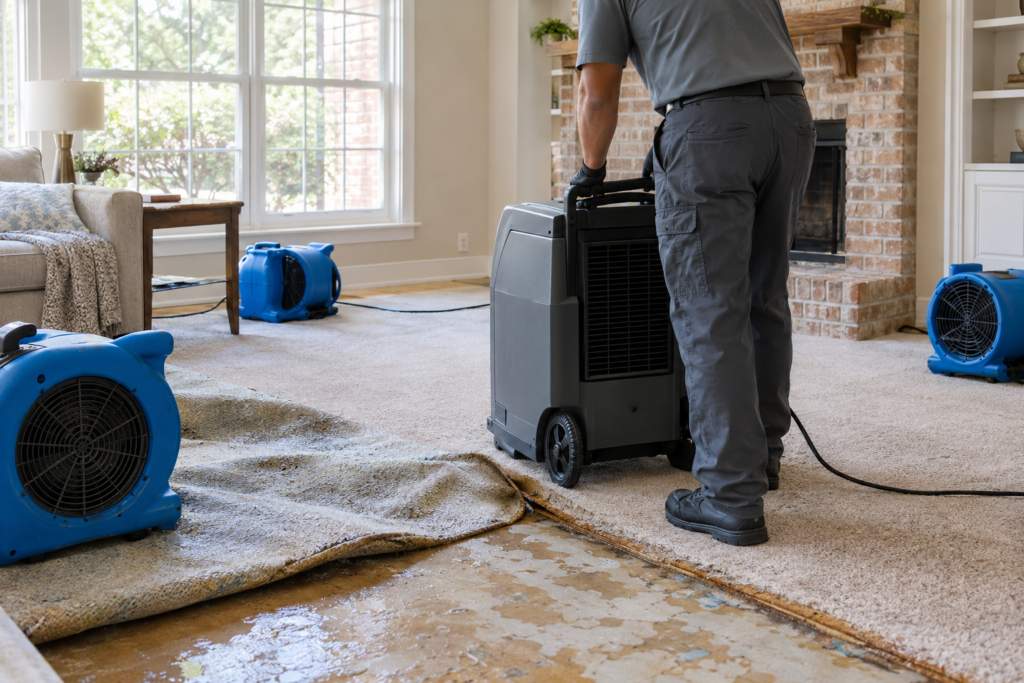
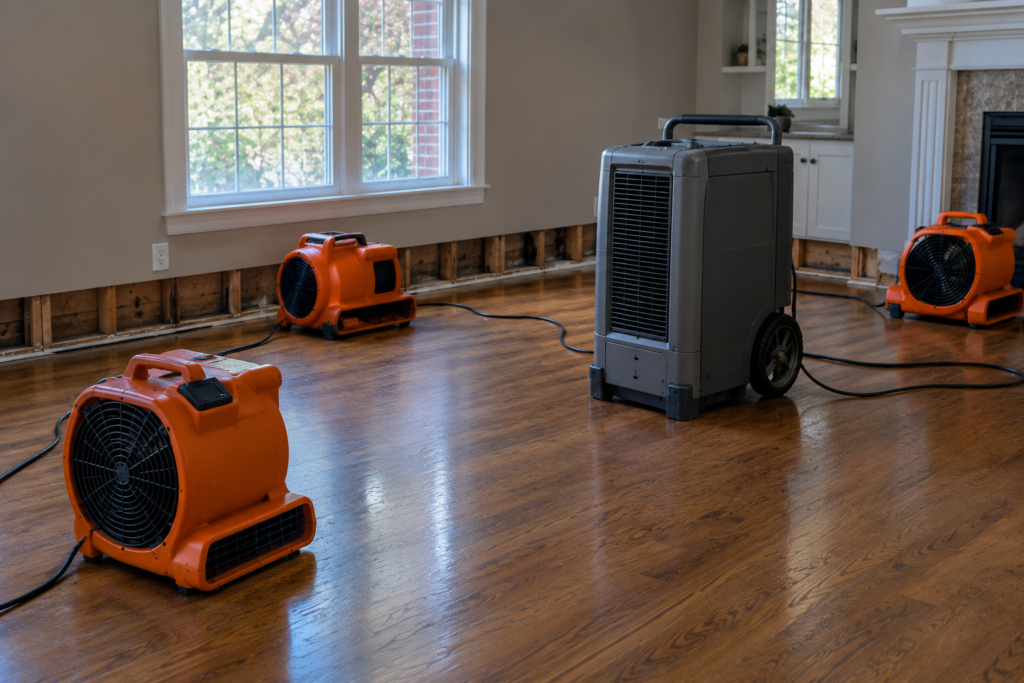
This is the longest stage, and the one most often done badly by non-specialists. Air movers push air across wet surfaces, and dehumidifiers pull the moisture out of the air so it doesn’t settle somewhere else. Structural drying is a managed process, not just leaving fans on.
What to expect during drying:
- Noise and warmth. The equipment is loud and runs around the clock, and the house can feel warm and dry.
- Daily checks. A technician returns, usually every day, to take moisture readings and move or remove equipment as areas dry.
- A defined finish line. Drying ends when the readings match normal dry levels for your home, not when the surface feels dry.
Most small to mid-size jobs take about three to five days to dry. Thick materials, hardwood floors, a lot of water or very humid weather can stretch that out.
Step 6: Cleaning and Sanitizing
Once the structure is drying, surfaces and belongings are cleaned. Salvageable contents such as furniture, clothing and decor can be wiped down or treated, and affected areas are sanitized, especially after gray or black water. Odors are dealt with at the source, not covered up.
Step 7: Repairs and Rebuilding
When everything is dry, the restoration shifts to repair. That can mean new drywall, paint, baseboards, insulation and flooring. Some companies handle this themselves, while others hand you off to a contractor. Ask which applies before you sign anything, because a single point of contact makes things simpler.
What if Mold Shows Up?
If water sat for more than a day or two, or you notice a musty smell or dark spots, mold may already be present. Mold inspection and testing tells you what’s there and how far it has spread, and mold remediation deals with it properly. Our article on how long mold removal takes explains the timeline.
What Affects the Cost and Timeline
Every job is different, and anyone who quotes a price without seeing the damage is guessing. The main factors are:
- How much of the home is affected, and how much water there was
- The type of water (clean, gray or black)
- How long the water sat before help arrived
- The materials involved, since hardwood and plaster dry slower than tile
- How much needs to be torn out and rebuilt
You should get a written scope of work, and the company should tell you about any changes as the job goes on.
Dealing With Your Insurance Company
Most homeowners’ policies cover sudden and accidental water damage, such as a burst pipe, but usually not long-term leaks, seepage or rising floodwater, which needs a separate flood policy. Call your insurer early, take photos and videos before anything is moved, and keep every invoice and moisture log. We can’t promise what an insurer will approve, but detailed records make a claim easier to support.
How to Choose a Restoration Company
Ask whether they offer 24/7 emergency service, whether they carry the right licenses and insurance, and whether they document their work with moisture readings and photos. Be wary of anyone who pressures you to sign right away or won’t explain their process. Our guide on how to choose a water damage restoration company in Columbia has a full checklist.
Frequently Asked Questions
Can I stay in my home during restoration?
Usually yes, for clean-water losses in part of the house. If there is sewage, widespread contamination or a lot of mold, you may need to stay elsewhere for a few days. Your technician can advise you.
How soon should I call after discovering water damage?
Right away. The first 24 to 48 hours decide whether materials can be dried and saved or have to be replaced.
Is drying with household fans enough?
For a small spill on a hard floor, maybe. For anything that reached walls, subfloors or insulation, you need professional equipment and moisture monitoring.
Will I need to replace my flooring?
It depends on the material and the water type. Tile and solid wood can often be saved, while carpet padding and laminate frequently can’t.
Ready for Help?
If you’re dealing with water damage in Columbia or the surrounding area, call (803) 721-1256 any time, day or night, or request a free quote. The sooner the water is out, the less you’ll have to replace.
Leave a Reply